


Better canola sourcing
A traceable and responsible choice
Canola is grown in crop rotation systems to improve soil fertility, prevent erosion and control pests. The stiff stems and thick canopy provide an ideal environment for a wide range of wildlife.
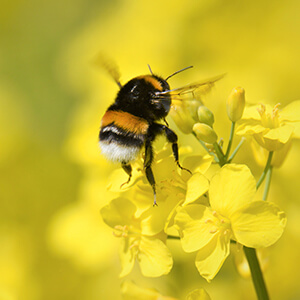
When in flower, the bright yellow blossoms provide an abundant food source for honeybees and other pollinators. And canola fields are often planted with buffer strips of wildflowers and shrubs to provide food and increase insect biodiversity outside the flowering season.

Specialty area*
Understanding our supply base and engaging with farmers
Our canola is non-GMO and sourced through a segregated Swedish supply chain. Farmers within this supply chain can use a digital climate performance platform to voluntarily report primary field-level data. They can also choose to participate in our ImpAAKtful™ regenerative agriculture program, developed in collaboration with farmer cooperatives to increase yields, reduce CO₂ emissions per metric ton of canola seed, and improve landscape health.
We also aim for a zero-waste canola supply chain. Discarded stalks become organic soil nutrients. After processing, the solid parts of the seed are converted into animal feed, while screening residues from production are sold for biogas, a renewable energy source.
Measuring environmental impact
Around 90% of greenhouse gas emissions in the canola value chain are Scope 3, generated through agricultural practices. The ImpAAKtful program focuses on practical actions at source that support the transition to climate-friendly farming, including soil health management, biodiversity improvements, and fossil-free field operations. Farmers choose the practices best suited to their land and receive financial incentives for implementing them. They report data linked to the regenerative agriculture practice they have chosen, which is independently verified to support the calculation of emissions reductions.
Reduced carbon footprint
Emissions are 37% lower than a standard European canola benchmark and 28% lower than a standard Swedish benchmark.
Early results are encouraging, with primary field-level data from the ImpAAKtful program showing lower emissions than standard Agri-footprint canola benchmarks.
Our canola-based emollients are ImpAAKtful mass-balance, allowing customers to use third-party verified primary data to support agriculture-related Scope 3 emissions reporting under frameworks such as SBTi and CSRD. Customers also have the opportunity to invest directly in ImpAAKtful regenerative agriculture practices to support additional claims.
Contact your AAK representative for more details.

We tailor our non-GMO Swedish canola oil for use in cosmetic applications
Our vegan-friendly canola-based emollients are rich in skin-replenishing fatty acids, skin-soothing phytosterols, and antioxidant tocopherols, making them an ideal choice for creating natural, clean beauty products.
An in-depth look at our canola offering

Discover our portfolio of canola-based emollients
Enhance the efficacy, functionality, and sensory appeal of your cosmetic formulations with our canola-based ingredients.

Be inspired by our canola-based formulations
Our functional and fabulous formulations for skin, hair, and sun care demonstrate the versatility of our portfolio.

Find out more about our AAK canola technology
Kind to the planet and your skin, our canola oil is expertly processed to meet your cosmetic application needs.

Specialty area*